Apocalypso

When does the swarm become the horde? What do zombies teach us about organizing? And what can robots show us about care?

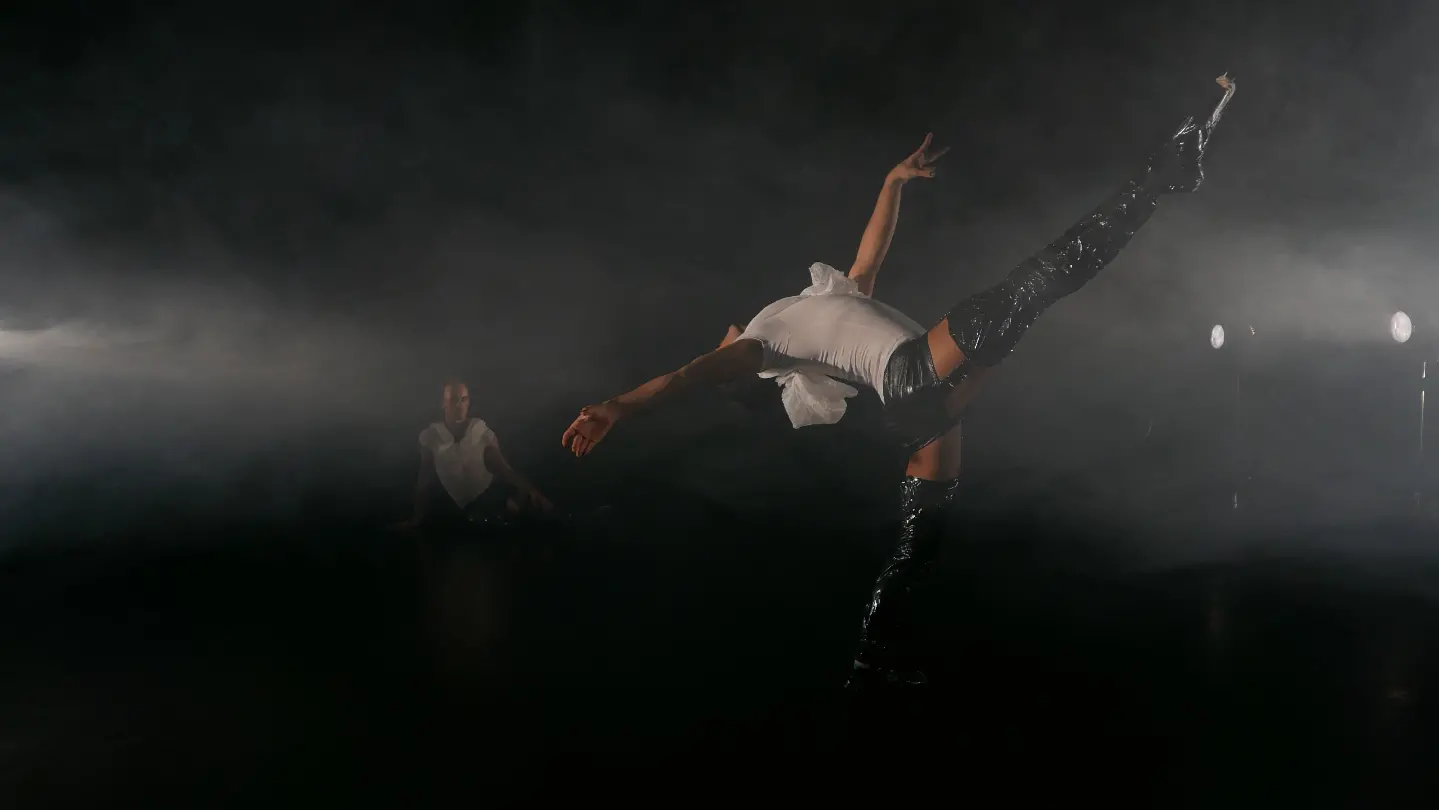
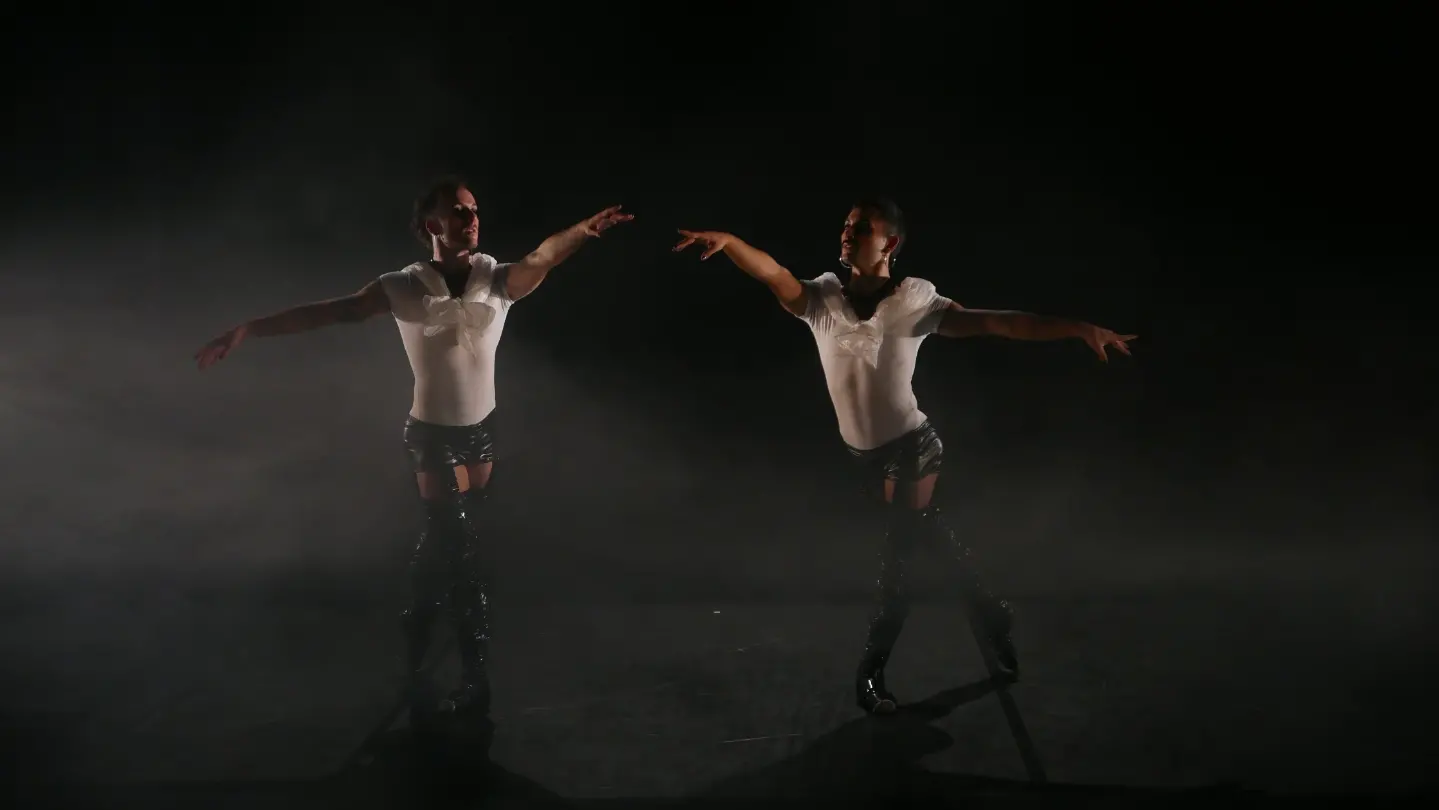
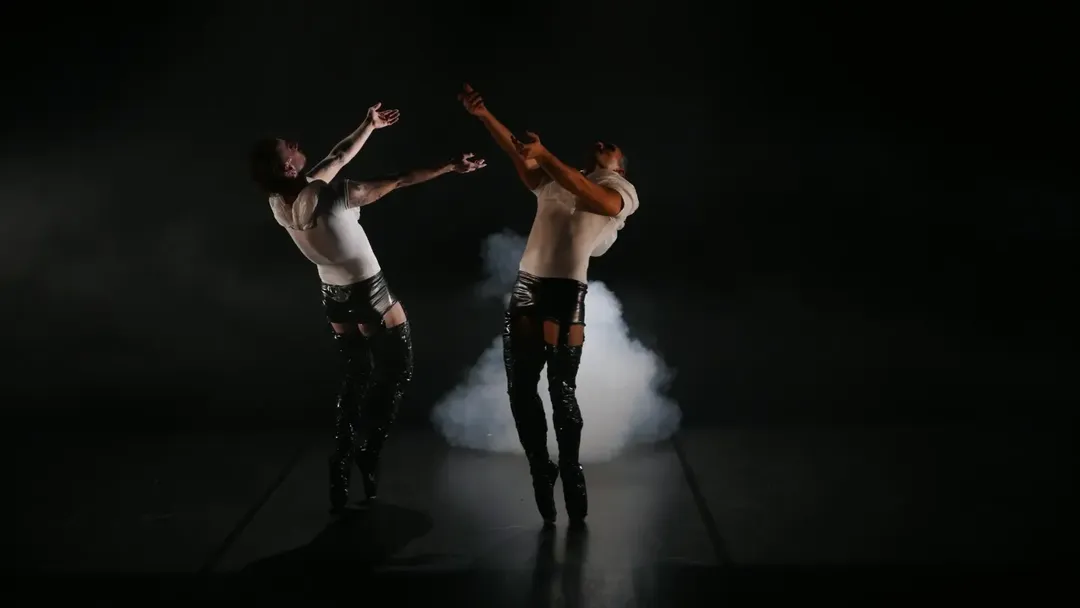
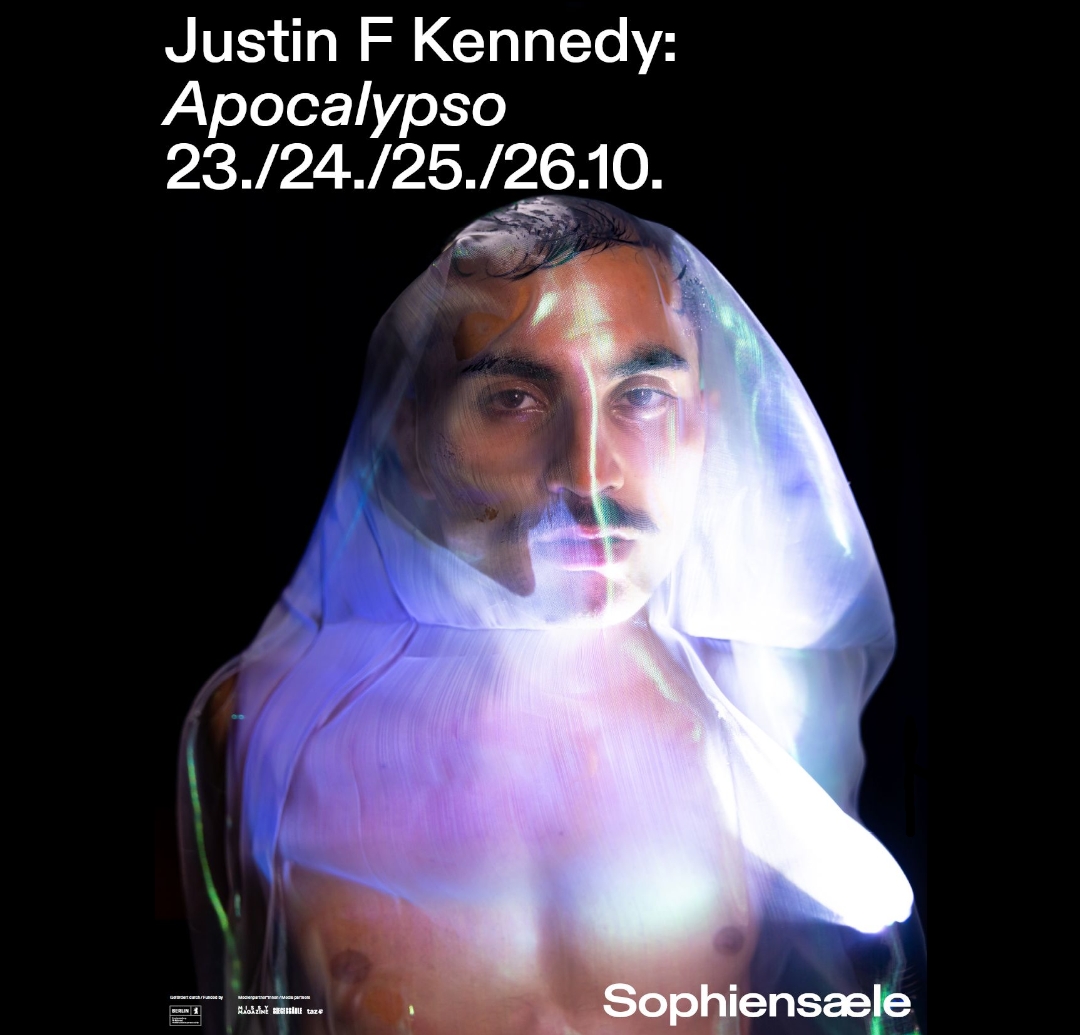
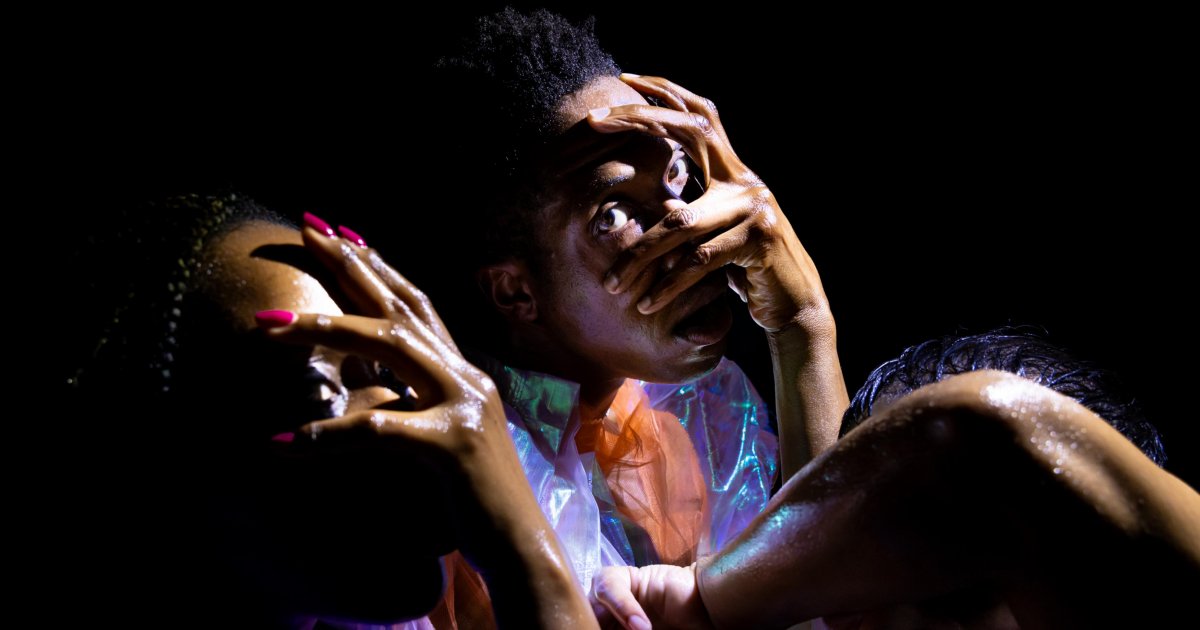
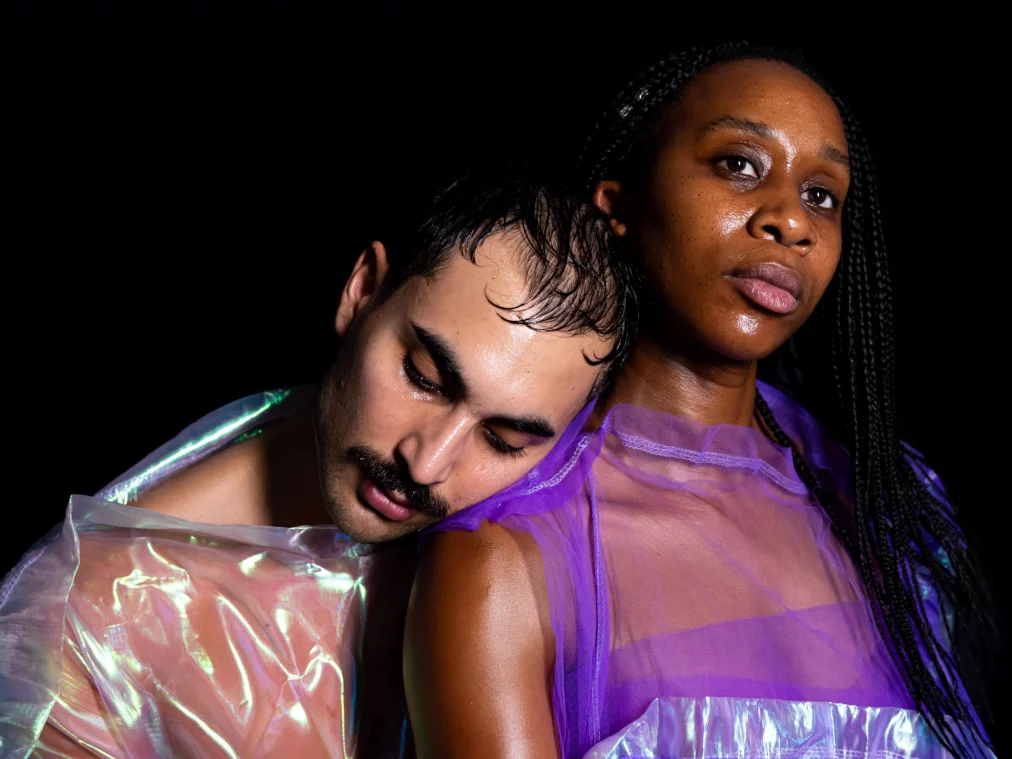
Apocalypso is choreography and speculative opera, exploring apocalypse through an Afro-pessimist lens. At its heart lies the ocean – as body, archive, and a space of both memory and becoming. Drawing from Tidalectics, a concept coined by Barbadian poet and historian Kamau Brathwaite, the performance weaves together contemporary Caribbean mythology with intersectional and ecocritical perspectives.

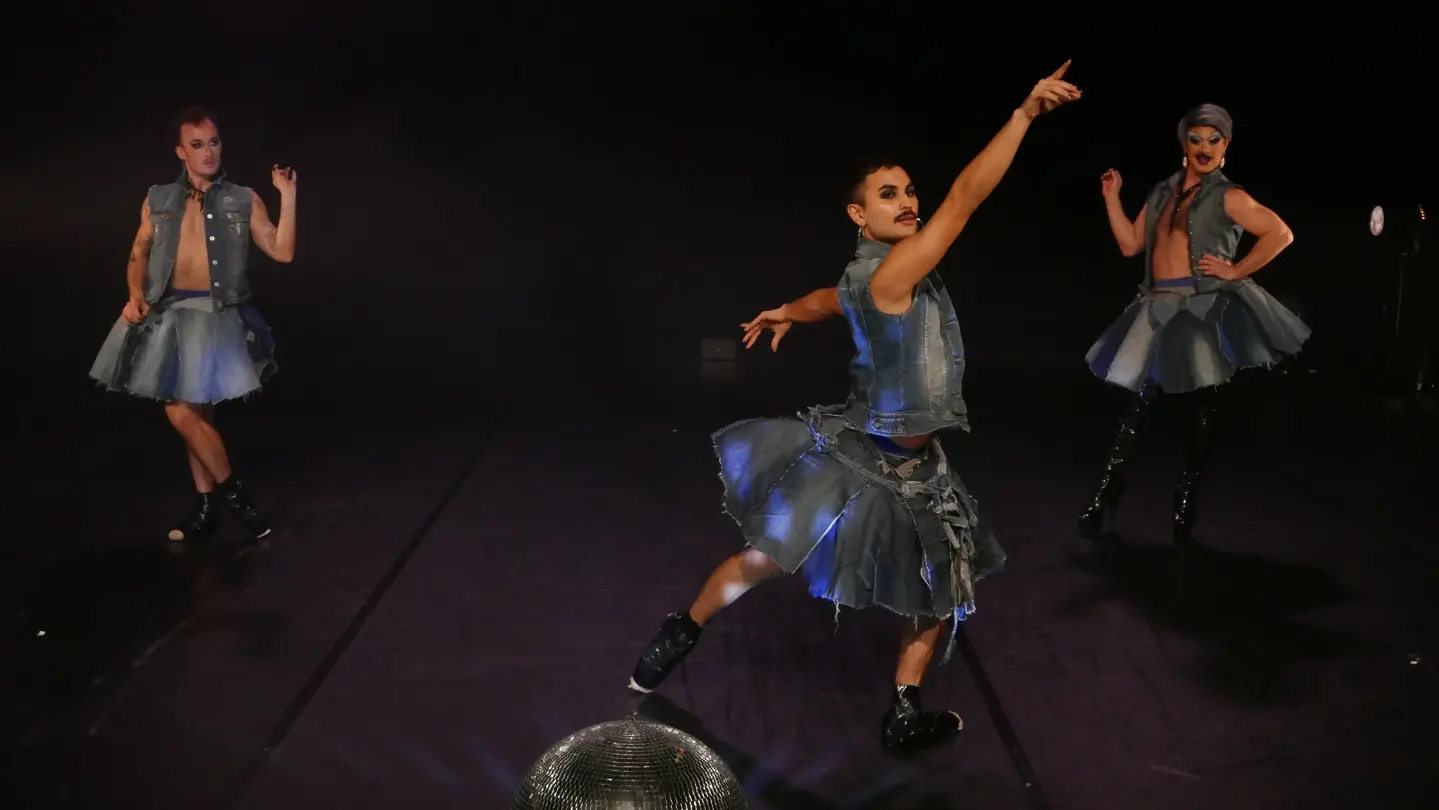
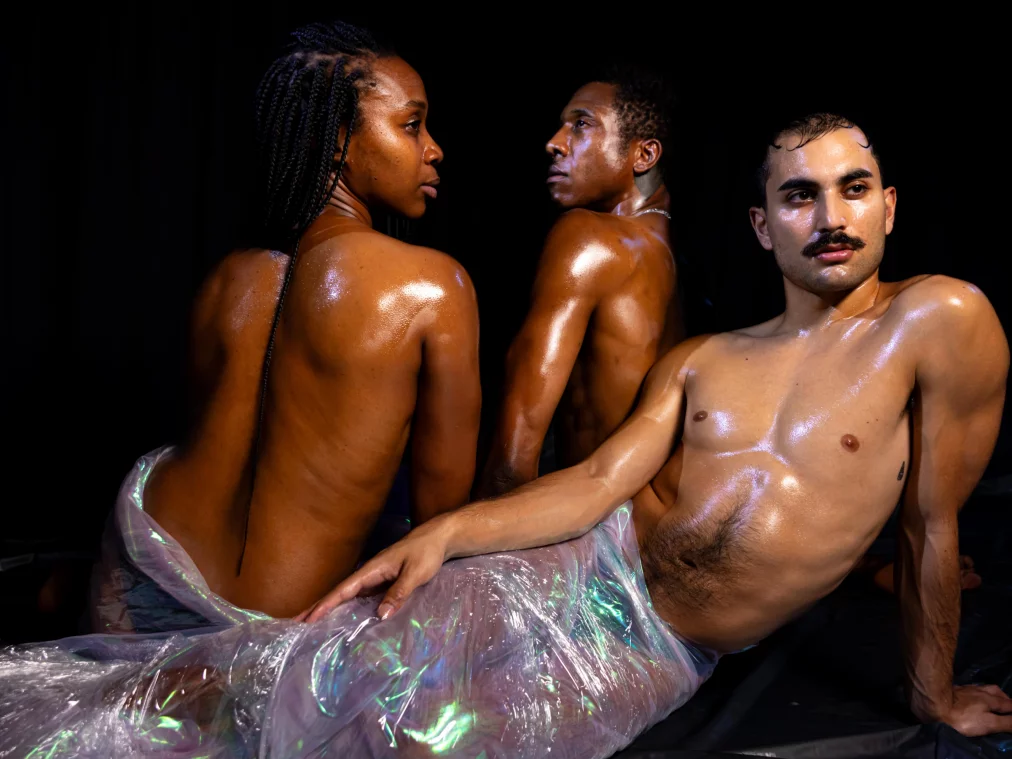
The title – a blend of “Apocalypse” (Greek: “to uncover hidden places”) and “Calypso” (an Afro-Caribbean musical tradition that addresses pressing political realities in a disarmingly casual tone) signals a work that reveals social grievances while at the same time seducing its audience. Set after the fictional Apocalypso of Internal Combustion, where hyper-individualist humans have collapsed in on themselves, and hybrid beings like mermaids, zombies, and animatrons rise to the surface.

These figures embody queer Black futures, Black femmedom, fluidity, and collective resistance. They raise questions of care, embodiment, labor, and survival beyond neoliberal notions of inclusion. Apocalypso critiques hollow ideals of togetherness, often staged in European performance spaces.

CreditsArtistic direction, performance: Justin F Kennedy
Performance: Orhun Mersin, Corey Scott-Gilbert, Willie Stark
Composition, performance: Guillermo E. Brown, Shannon Funchess
Additional composition: Wynne Bennett
Artist Talk: Ligia Lewis
Set design: Makode Linde
Associate set design: Jos McKain
Costume design: SADAK
Lighting design: Joseph Wegmann
Prosthetic design: Una Ryu
Headpieces, graphic design: Evan Loxton
Technical direction: Lui Marschewski
Production: Diana Paiva, Anna von Glasenapp / high expectations, Hilary Fox

A production by Justin F Kennedy in co-production with Sophiensæle. Funded by the Berlin Senate Department for Culture and Social Cohesion and the Fonds Darstellende Künste with funds from the Federal Government Commissioner for Culture and the Media.
OceanFlight

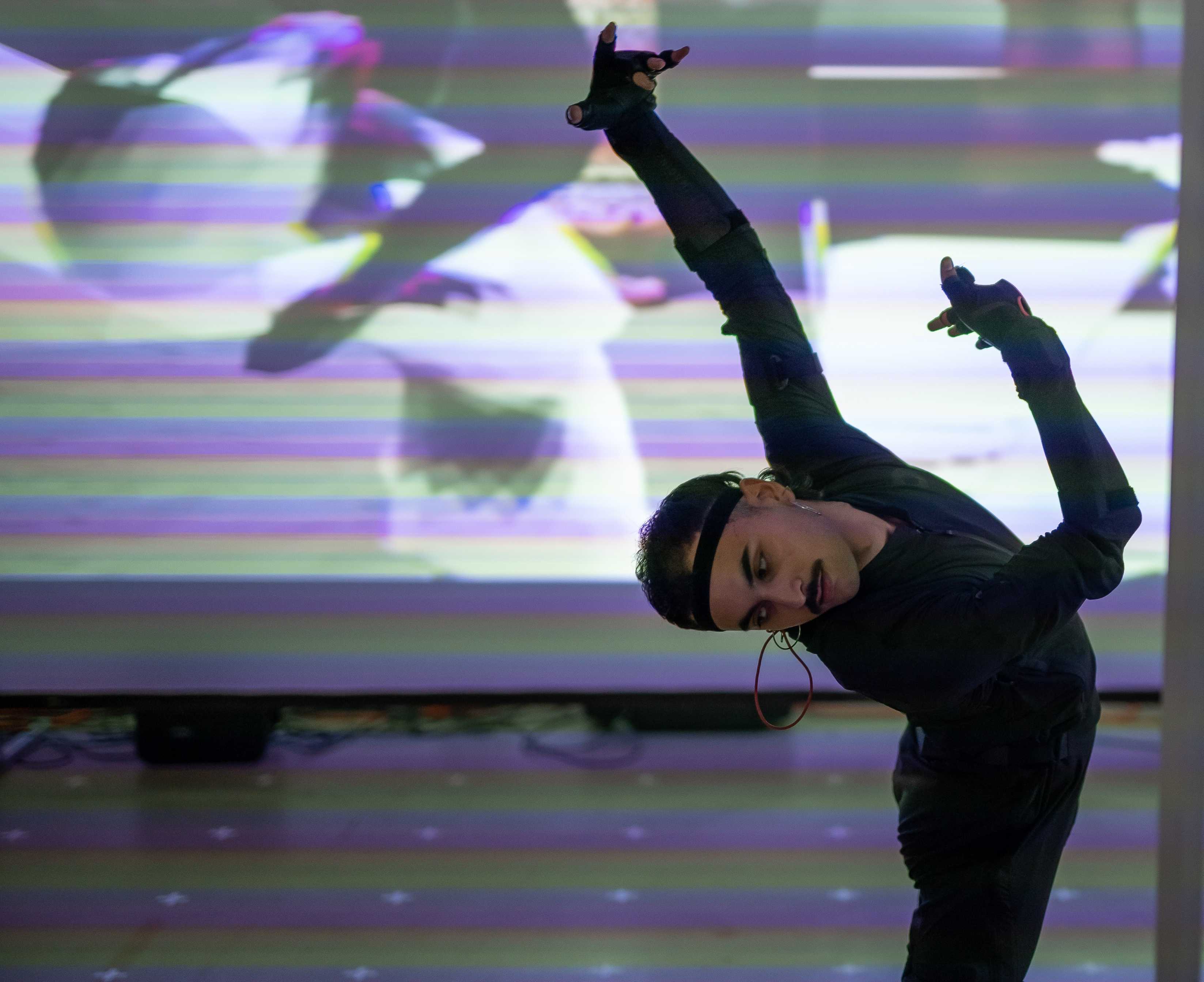
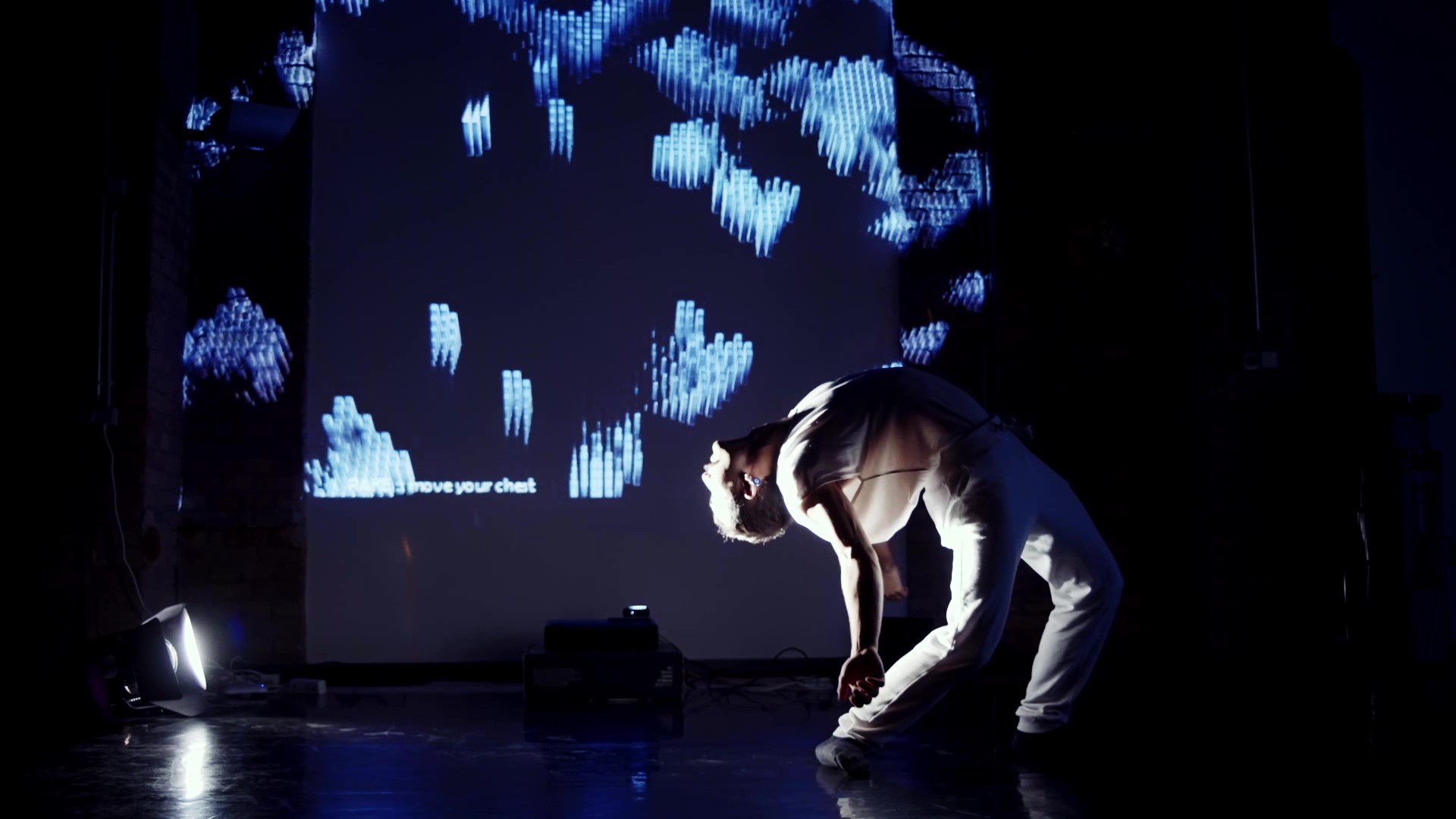
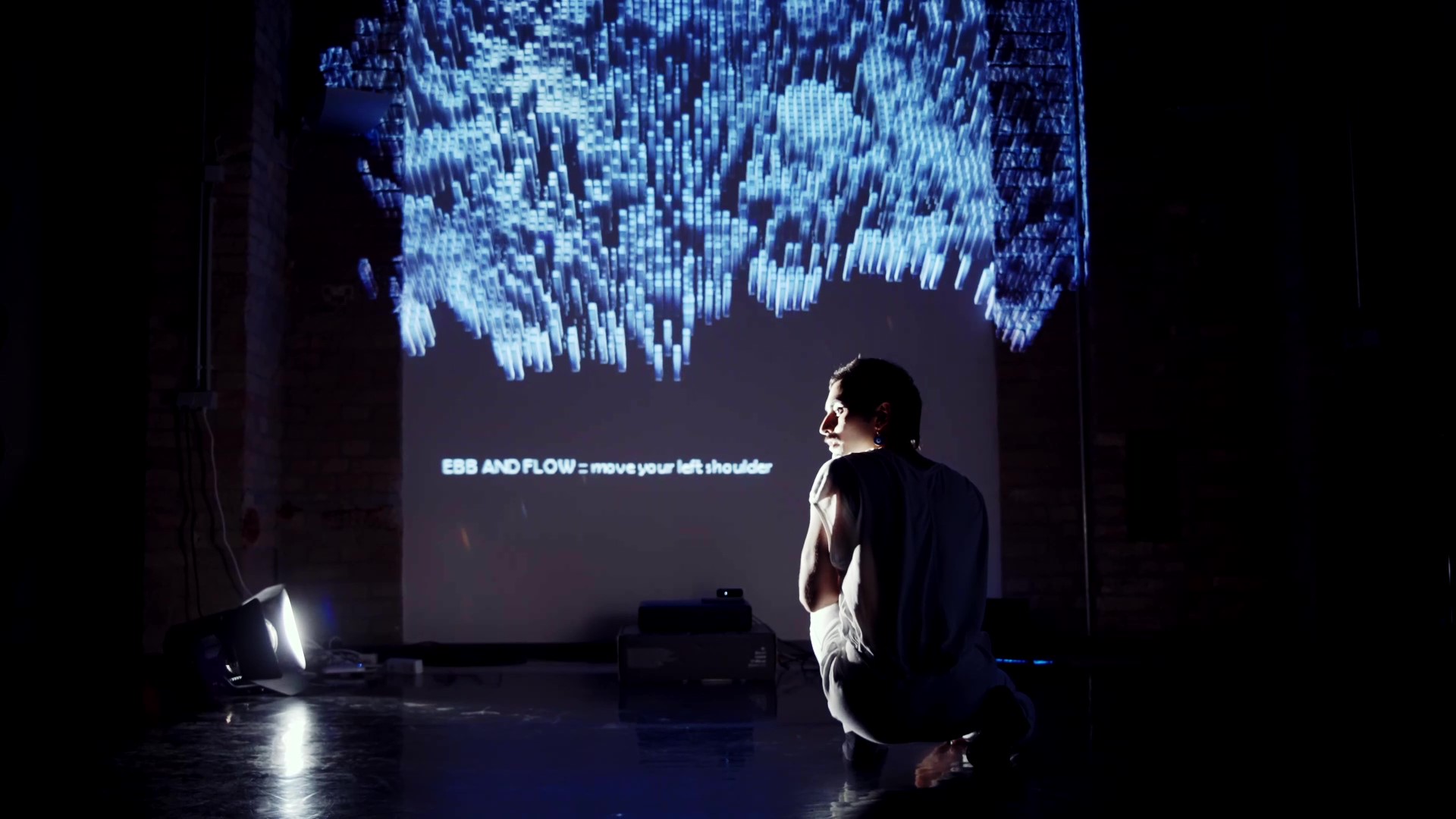
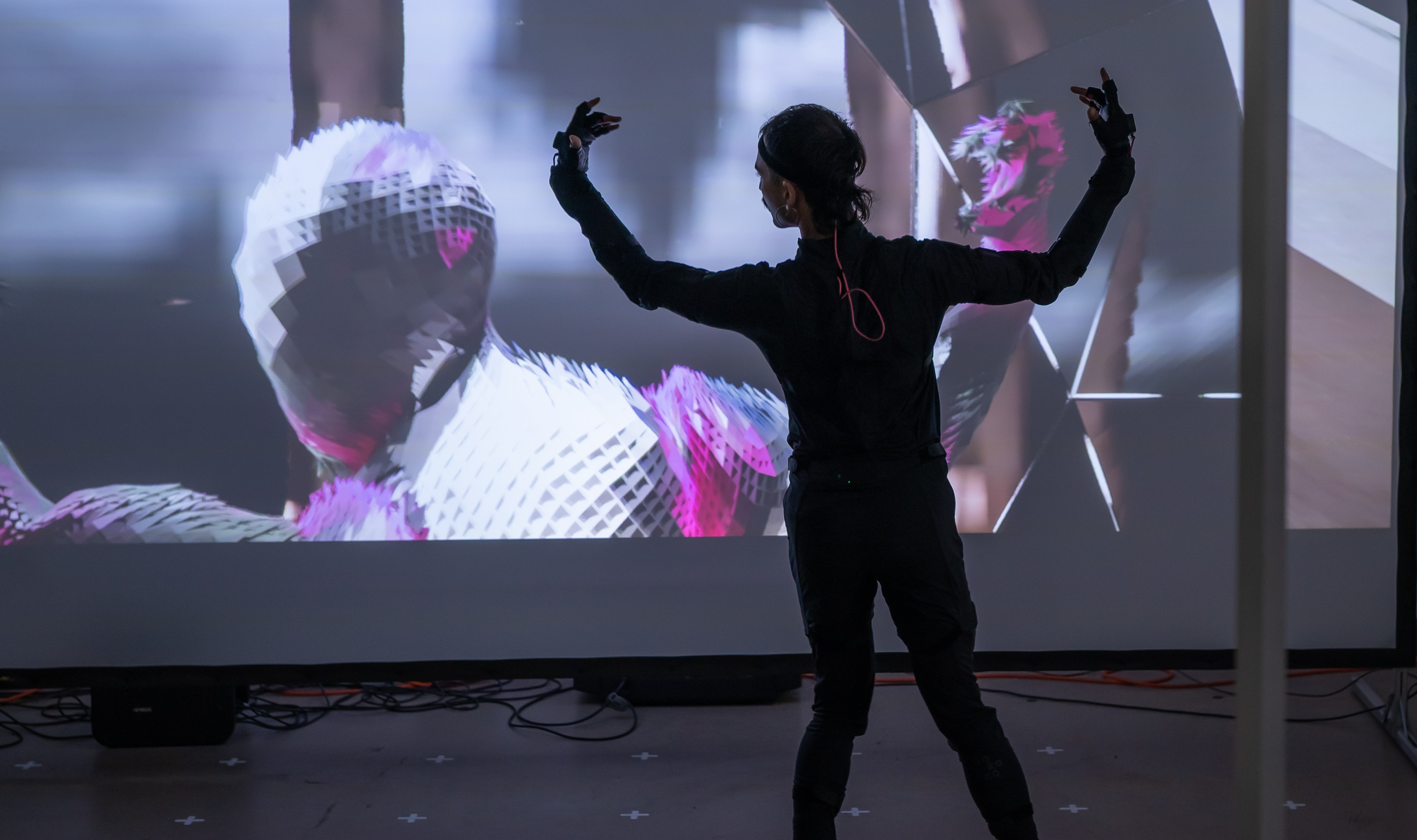
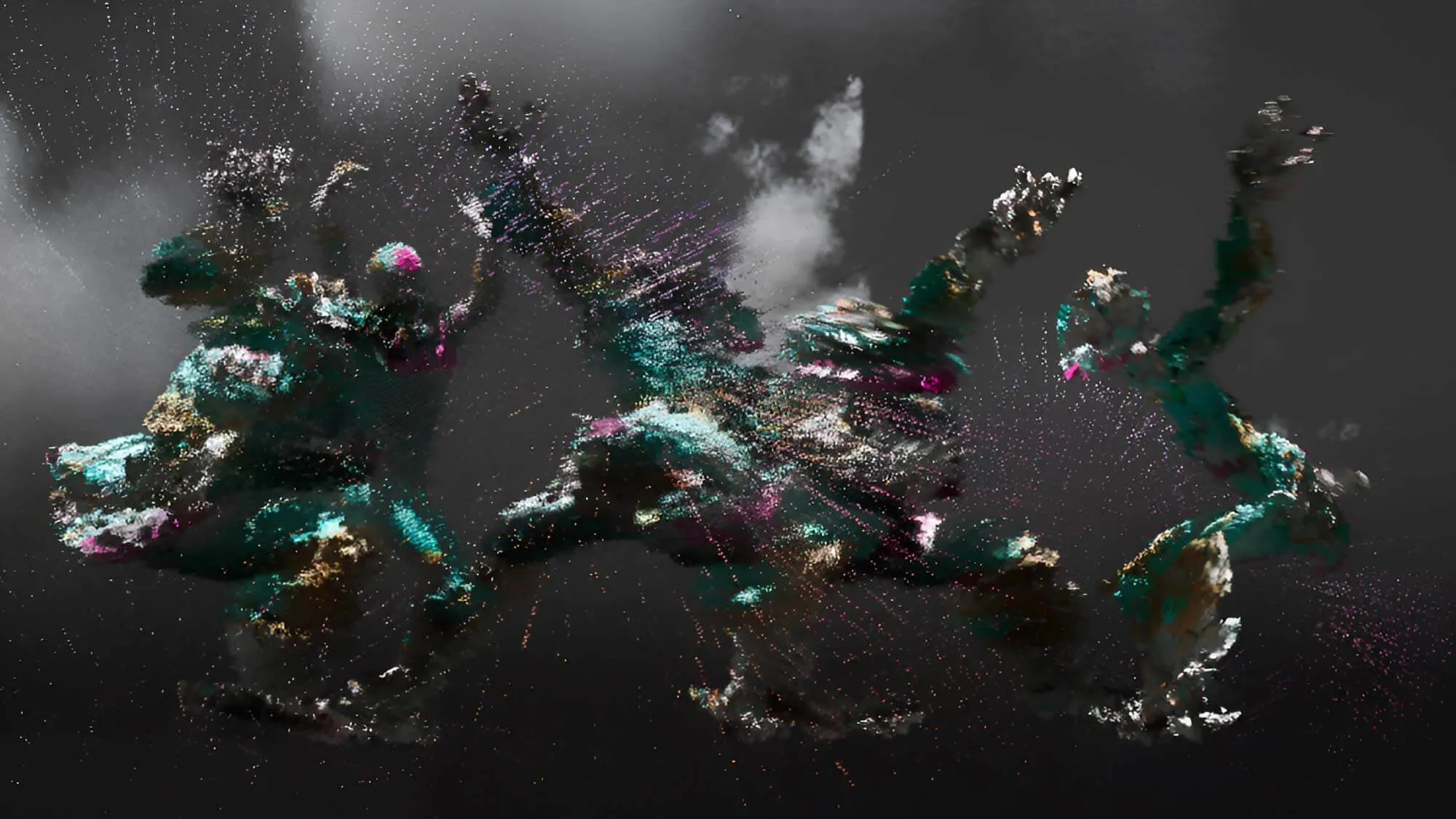
The performance questions how we present ourselves in the digital realm, exploring avatars and metaverses as essential aspects of our future society. Drawing on Gilbert Simondon's theory of transindividualism, OceanFlight combines motion tracking and gaming software to create an interconnected dance performance. The relation between dancer and avatar is not a merging of the two but an unfinished process, out of which something third emerges. The choreography goes back to Merce Cunningham, who in LifeForms (1991) and Biped (1999) used the machine's inability to model a body as a generative constraint. Here that constraint becomes the limitations of motion capture itself, letting bodies fold into impossible geometries when the tracking breaks. The transdisciplinary team invites viewers to reflect on the transformative power of digital self-expression and its impact on our identities.

This work was developed as an MA project by Jonny-Bix Bongers as part of the Design and Computation program. The texts and the movement research are based on and inspired by original developments as well as Bertolt Brecht's "Flight across the Ocean" and Jacques Lacan's "The Mirror Stage as Formative of the I Function."

CreditsConcept, Music, Development: Jonny-Bix Bongers
Development: Christian Schmidts
Dance: Orhun Mersin
Camera: Fang Tsai
full video

Attitude

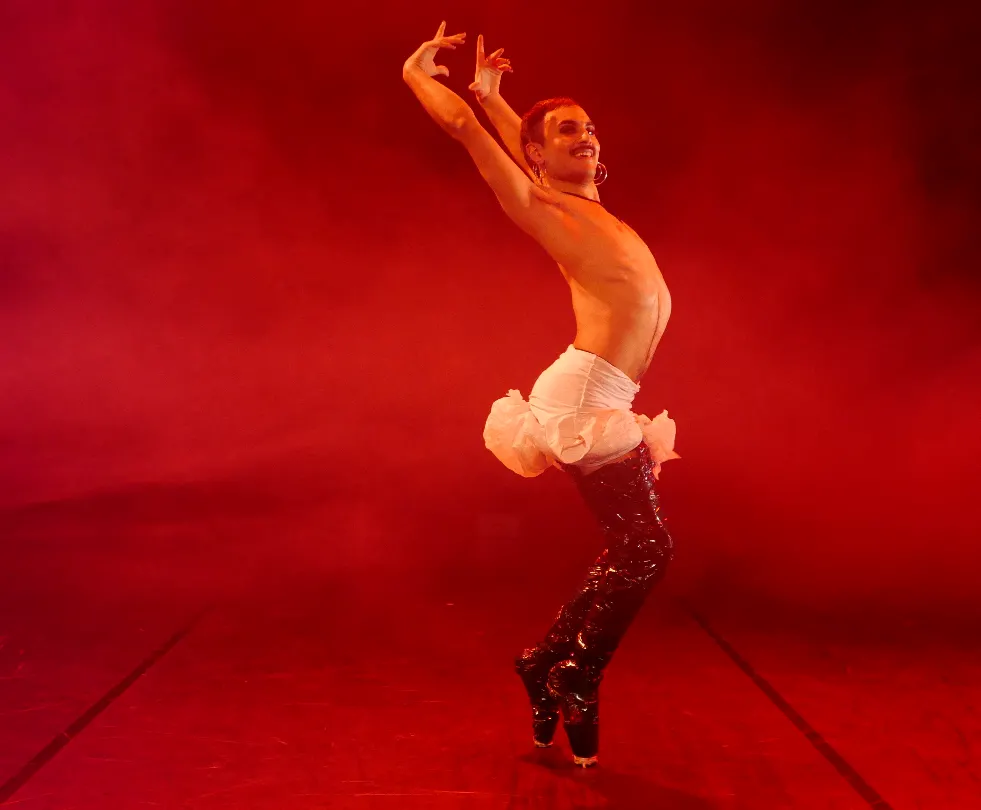
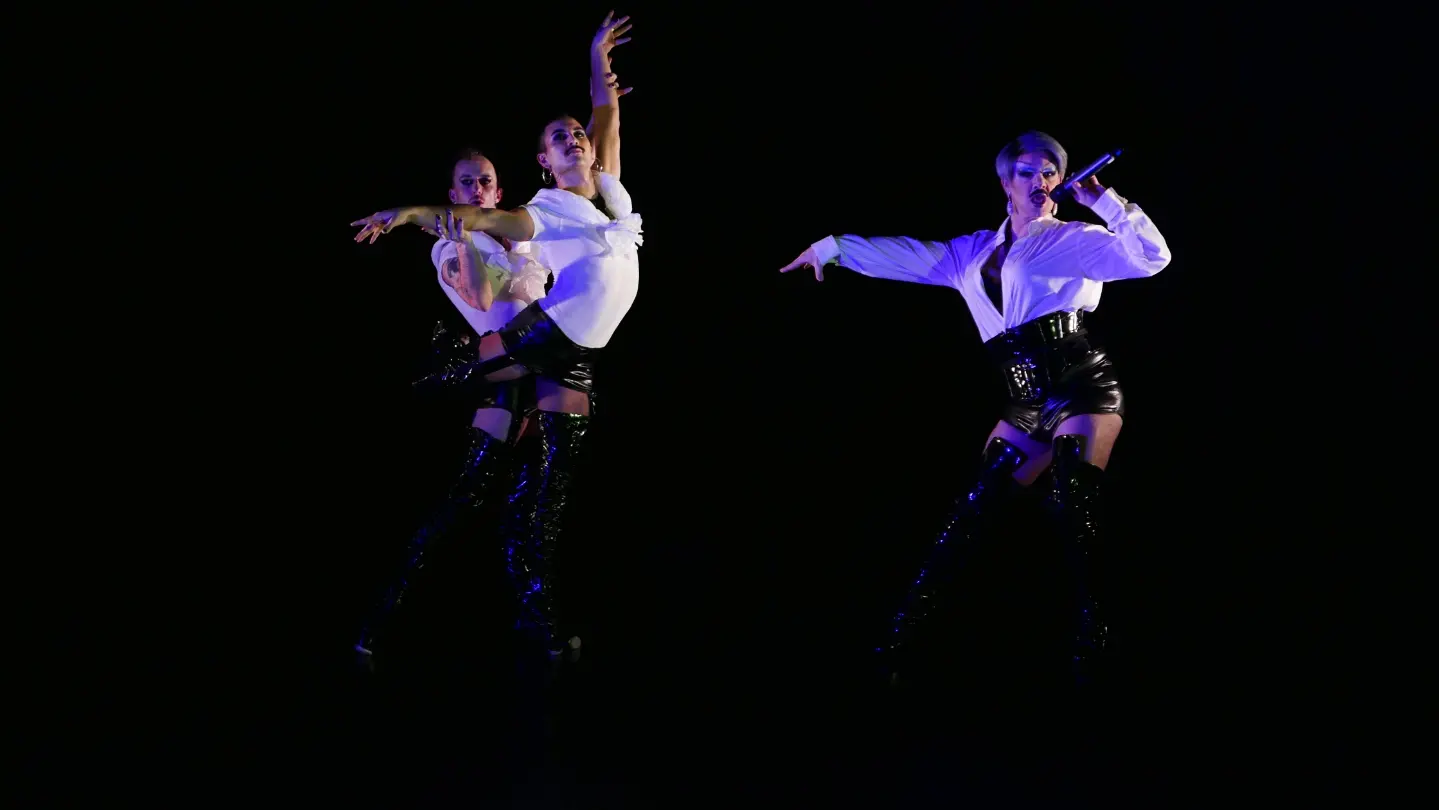
Attitude is a contemporary ballet etude for queer ballet dancers who dance on pointe and a drag performer — Orhun Mersin (Istanbul), Ted Littlemore (Canada), and Gieza Poke (Scotland). A study of what happens when you mix the rigorous vocabulary of classical ballet and pointe dance with contemporary choreographic impulses. Fusing autobiographical narratives with pop culture and queer sensibilities, the pointe shoe becomes fuel for movement and choreography.

CreditsChoreography, direction, costumes: Tomi Paasonen
Dance: Orhun Mersin, Ted Littlemore, Gieza Poke
Lighting design: Asier Solana

Cell Farming

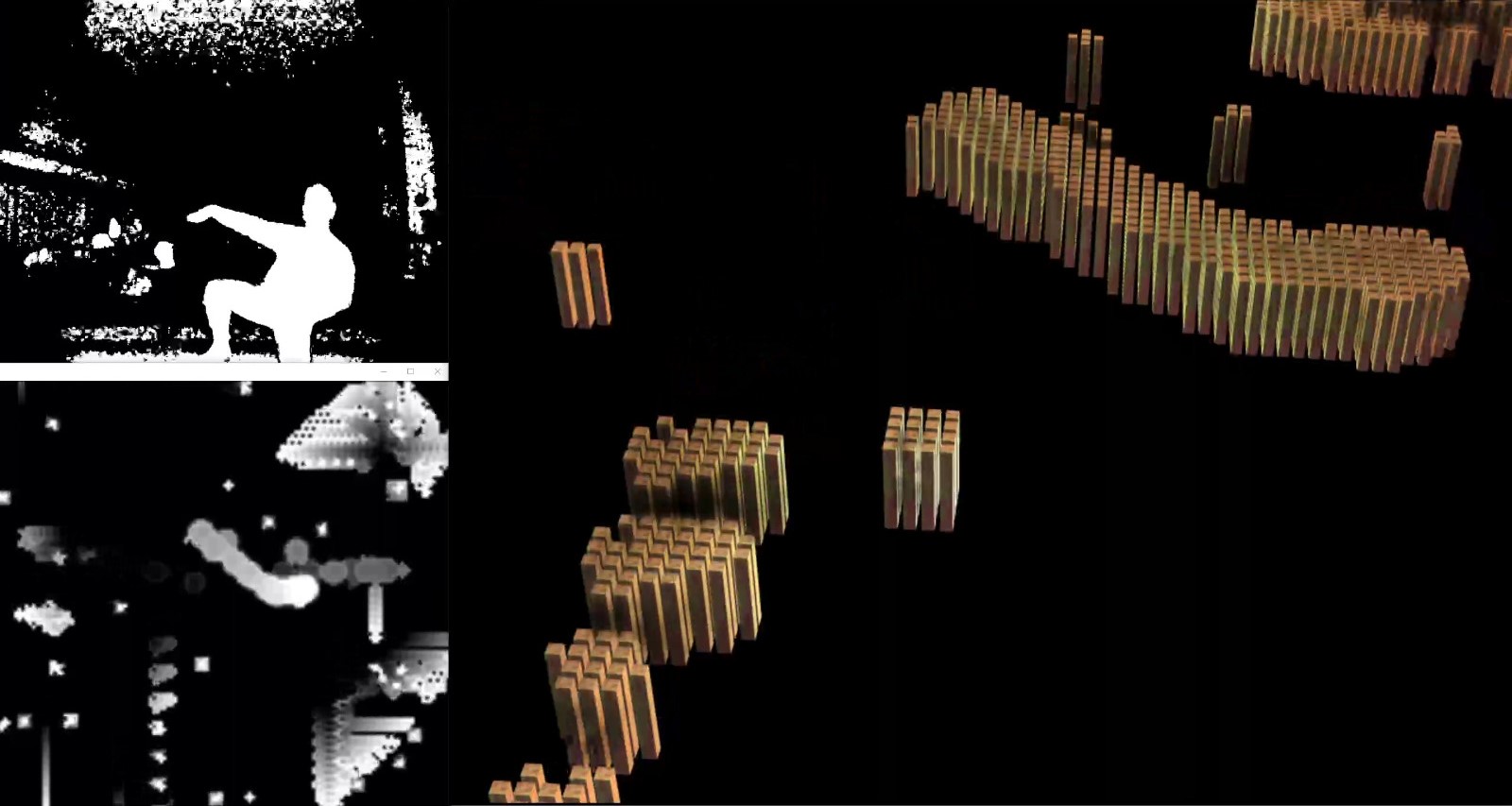
Cellular automata was a landmark discovery, enabling scientists to model and more deeply understand evolving social dynamics. LifeViewer, one of the leading software for simulating cellular automata, allowed these complex, emergent patterns to be viewable in 2D. Our vision extends the concept of LifeViewer: instead of a single pixel replicating on a board, abstract patterns are composed of dance-made traces. The dramaturgical core of this project is the translation of cellular automata into a dance framework. As the cells that colonize space over time are quite literally produced by a human performer, we bring awareness to our sense of agency within our own evolution.

CreditsConcept / Research: Maria Pyatkova, Jo Kolski, Georgica J. Pettus
Visual design / Creative tech: Barış Pekcagliyan, Orhun Caglidil
Curation of Visuals: Orhun Caglidil, Maria Pyatkova, Jo Kolski, Georgica J. Pettus
Dancers of Performances: Orhun Caglidil, Maria Pyatkova
Sound design: Katrine Bregnum

Developed within the framework of the AR LOOP MASHINE | CREATURE Residence. Funded by the Federal Government Commissioner for Culture and the Media within the framework of NPN | Stepping Out | NEUSTART KULTUR.